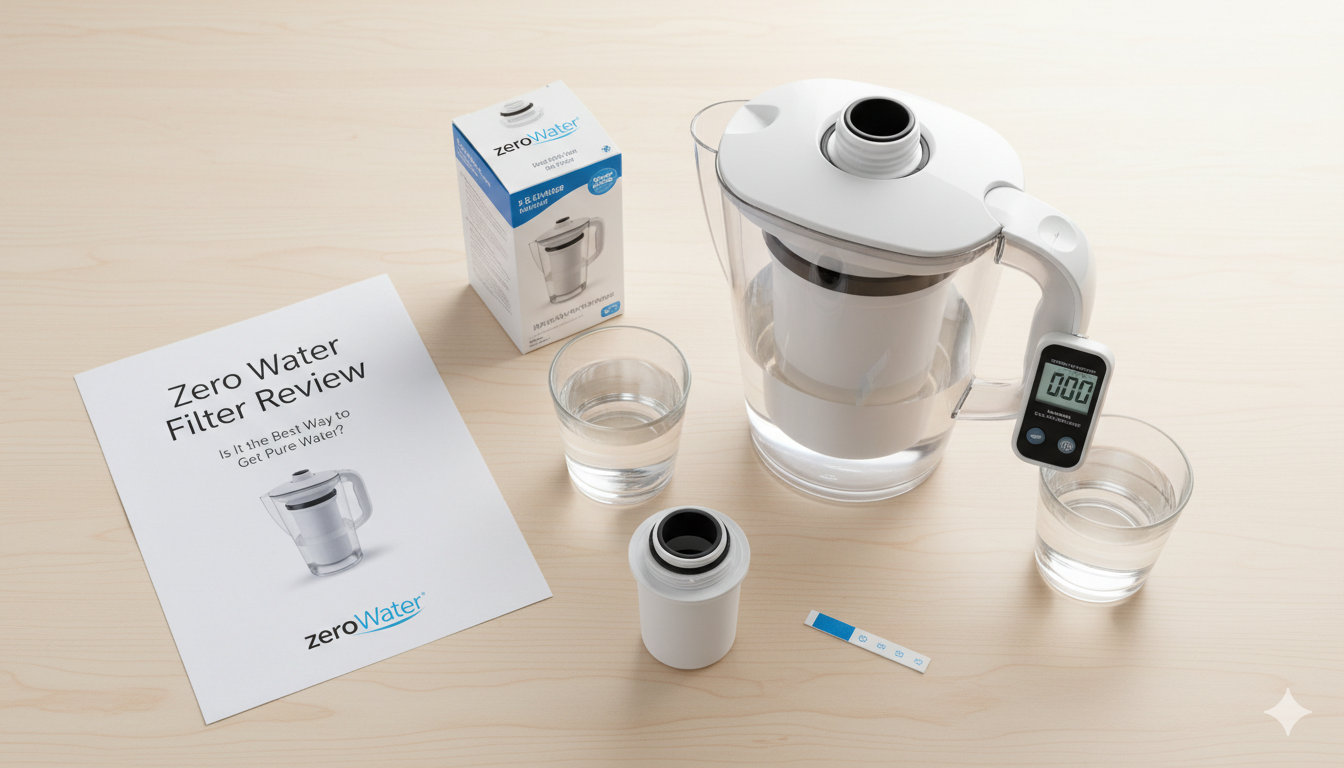
Have you ever looked at a glass of tap water and wondered what is actually inside it? Most of us just turn on the faucet and hope for the best. However, many pipes carry tiny bits of minerals, salts, and even metals. This is where a zero water filter becomes your best friend in the kitchen. Unlike a regular pitcher that just makes water taste better, this system aims for actual purity.
I remember the first time I tested my tap water with a digital meter. I was shocked to see how many “hidden” things were floating in my drink! Using a zero water filter changed my perspective. It doesn’t just mask the chlorine smell; it physically strips away the junk. If you want your coffee to taste like coffee and your tea to be crystal clear, starting with a blank slate of pure H2O is the only way to go.
What Exactly Is a Zero Water Filter?
At its core, a zero water filter is a specialized pitcher or dispenser designed to reach a “000” reading on a TDS meter. TDS stands for Total Dissolved Solids. Think of these as tiny invisible hitchhikers like calcium, magnesium, and lead. While some minerals are okay, too many can make water taste “hard” or metallic. This filter uses a unique 5-stage process to ensure nothing but water makes it into your glass.
Most standard filters use a simple carbon block. While carbon is great for removing that swimming pool bleach smell, it leaves many dissolved solids behind. The zero water filter goes a step further by using ion exchange technology. This acts like a powerful magnet, pulling out the bad stuff that other pitchers simply ignore. It is a game-changer for anyone living in areas with old plumbing or very hard city water.
Detailed Comparison: Zero Water vs. Standard Filters
| Feature | Zero Water Filter | Standard Carbon Filter |
| Filtration Stages | 5-Stage System | 1 or 2 Stages |
| TDS Removal | Removes 99.9% (000 reading) | Removes approx. 30-50% |
| Lead Removal | NSF Certified | Not always certified |
| Taste Profile | Pure, crisp, and neutral | Improves smell/chlorine |
| Included Tools | Free Digital TDS Meter | None |
How the 5-Stage Filtration System Works
The secret sauce of the zero water filter is how it treats the water in five different steps. First, it passes through a fine screen to catch large particles like rust or sand. Next, a foam distributor ensures the water spreads out evenly so every drop gets cleaned. This prevents “channeling,” where water finds a quick path through the filter without being properly scrubbed.
The middle stages are where the heavy lifting happens. A multi-layer carbon and oxidation-reduction alloy removes chemicals and organic contaminants. Then, a comprehensive ion exchange resin swaps out the dissolved solids for pure water molecules. Finally, an ultra-fine screen and non-woven membrane layers catch any remaining tiny bits. This thorough journey ensures the zero water filter delivers laboratory-grade purity right to your kitchen table.
Testing Your Water with a TDS Meter
One of the coolest things about buying a zero water filter is the little digital tool that comes in the box. This is a TDS meter. You simply dip it into a glass of water, and it gives you a number. If your tap water reads 250, it means there are 250 parts of “stuff” per million parts of water. After passing through the zero water filter, that number should drop all the way to zero.
I recommend testing your water once a week. It feels like a small science experiment in your own home! When the meter starts reading “006” or higher, you know it is time to swap the cartridge. This transparency is why so many people trust this brand. You don’t have to guess if the filter is working; the digital meter provides the proof right before your eyes.
Does Zero Water Remove Lead and Chromium?
Many people worry about heavy metals in their drinking supply. The good news is that the zero water filter is specifically certified to reduce lead and Chromium 6. These are nasty substances that you definitely do not want in your body. Because the ion exchange process is so aggressive, it grabs these heavy metals and holds onto them tightly inside the filter.
It is important to note that not all pitcher filters can do this. If you live in an older city with lead pipes, a zero water filter provides a very affordable layer of protection. It gives you peace of mind without needing to install an expensive under-sink reverse osmosis system. Just pour the water in the top, wait a few minutes, and enjoy safety in a glass.
The Impact on Taste: Coffee and Tea Lovers
If you are a coffee nerd like I am, you know that water is 98% of your brew. Using a zero water filter can actually change the flavor profile of your morning roast. When there are no minerals in the water to interfere, the subtle notes of the coffee beans really shine through. Your light roasts will taste brighter, and your dark roasts will taste cleaner without that bitter “chalky” finish.
Tea drinkers will notice an even bigger difference. Have you ever seen a weird oily film on top of your black tea? That is usually caused by minerals in hard water reacting with the tea tannins. When you use a zero water filter, that film disappears completely. The tea remains perfectly clear and tastes exactly how the grower intended. It’s a simple upgrade that makes a daily ritual much more enjoyable.
Maintenance and Filter Life Expectations
A common question is: “How long does a zero water filter last?” The answer depends entirely on your local water quality. If your tap water is relatively clean, one filter might last for 30 or 40 gallons. However, if your water is very “heavy” with minerals (a high TDS reading), you might need to change it more often. This is the trade-off for such high-level purity.
To get the most out of your zero water filter, always keep the pitcher in the fridge. Keeping the water cold helps maintain its freshness. Also, make sure the filter is screwed in tightly. If it is loose, unfiltered water might leak into the bottom reservoir. Taking care of your pitcher ensures that every sip remains at that perfect “000” level for as long as possible.
Comparing Costs: Is It Worth It?
While the replacement cartridges for a zero water filter can be more expensive than basic brands, you have to look at the value. You are essentially getting bottled-water quality for a fraction of the price of buying plastic jugs. Plus, you are helping the environment by not throwing away hundreds of plastic bottles every year. It is an investment in your health and the planet.
When you factor in the cost of the included TDS meter (which usually costs about $15 on its own), the initial kit is a great deal. For many families, the zero water filter pays for itself within the first two months. If you currently buy distilled water for appliances like steamers or irons, you can use this filtered water instead and save even more money!
Common Myths About Zero TDS Water
Some people worry that drinking water from a zero water filter is “too pure” because it removes healthy minerals. While it is true that minerals like magnesium are removed, most doctors agree that we get the vast majority of our nutrients from food, not water. If you eat a balanced diet with plenty of vegetables, you are getting all the minerals you need.
Another myth is that all water filters are the same. This is simply not true. Most “fridge filters” are just basic screens that stop big particles. The zero water filter is a sophisticated chemical processor. It is designed for people who want the highest level of filtration possible without a complex plumbing setup. Understanding the difference helps you make the best choice for your household’s specific needs.
Why I Recommend Zero Water for New Parents
When you are mixing baby formula, you want the purest water possible. You don’t want to worry about fluoride levels or trace amounts of chlorine. Using a zero water filter gives parents a clean slate. It ensures that the only things going into the bottle are the nutrients found in the formula itself. It’s one less thing for a busy parent to worry about.
I often give these pitchers as baby shower gifts. It is a practical present that actually gets used every single day. Since babies are more sensitive to contaminants than adults, the 5-stage protection of the zero water filter is a perfect fit. It’s a simple way to create a safer environment for the littlest members of the family.
Frequently Asked Questions
1. How do I know when to change my zero water filter?
You should use the included digital TDS meter to test your water. When the meter shows “006” or higher, the filter is no longer at peak performance and should be replaced.
2. Does this filter remove fluoride?
Yes! The 5-stage ion exchange process used in the zero water filter is very effective at reducing fluoride levels in your tap water.
3. Why does my water taste like lemons or fish?
If you notice a sour or fishy taste, it means the filter is completely saturated and needs to be changed immediately. The ion exchange beads are releasing the collected minerals.
4. Can I use hot water in the pitcher?
No, you should only use cold or room temperature water. Hot water can damage the filtration layers and reduce the effectiveness of the zero water filter.
5. Is the pitcher BPA-free?
Yes, all zero water filter pitchers and dispensers are made from high-quality, BPA-free plastic to ensure your water stays safe and clean.
6. Does it take a long time to filter?
Because it has 5 stages, it is a bit slower than a basic carbon filter. However, the wait is worth it for the level of purity you receive.
Conclusion: Final Thoughts on Pure Living
Choosing a zero water filter is a commitment to better hydration and peace of mind. In a world where we often don’t know what’s in our food or air, having total control over your water is a huge win. Whether you want to improve the taste of your coffee or protect your family from heavy metals, this system delivers on its promise of “zero” contaminants.
Ready to see what’s in your water? I highly suggest grabbing a pitcher and testing your tap today—you might be surprised by the results!