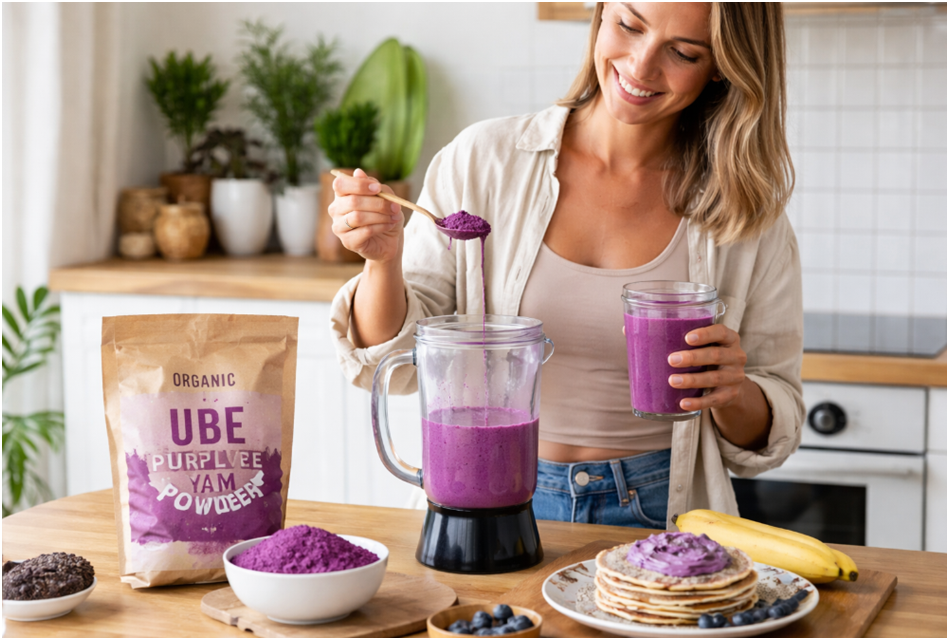
Curious about the sudden spotlight on a bright purple powder in health shops and recipes across Australia? That vivid shade isn’t just for show. Ube powder made from the famous ube purple yam has made its mark beyond Filipino desserts and found its place on Aussie shelves. More than just a colourful trend, it’s a root vegetable packed with fibre, antioxidants, and earthy sweetness. This article explores why ube isn’t just another superfood fad, but a natural ingredient worth adding to your routine. From nutrition to taste and ease of use, here’s why many are turning to purple yam as a daily ally.
What exactly is ube and where does it come from?
The name ube (pronounced ooh-beh) might sound unfamiliar unless you’re a fan of Filipino cuisine. Native to Southeast Asia, it’s a species of ube purple yam known for its rich violet colour, slightly nutty flavour, and creamy texture when cooked. In Australia, it’s often confused with taro or purple sweet potatoes, but ube stands apart both nutritionally and visually. Ube is most often used in powdered form here, as it’s easier to store, versatile in recipes, and retains its nutritional profile. This powder is made by peeling, steaming, and dehydrating the root before grinding it into a fine, purple flour. You can find ube purple yam powder in several natural health stores or purchase it conveniently via Organic Ube Australia
, which offers an organic-certified version sourced directly from trusted growers.
Using ube in powder form also means it’s easy to mix into smoothies, oats, baked goods, or even savoury dishes, allowing for a creative and healthy twist to your diet. The story of ube is as vibrant as its pigment. Traditionally used in dishes like ube halaya or as a cake flavour, it’s now winning hearts across the globe thanks to its flavour and promising nutritional profile. It’s not just pretty on a plate; it delivers substance too.
What are the key health benefits of purple yam powder?
If you’re looking to add more naturally nourishing ingredients to your diet, ube ticks multiple boxes. This root vegetable is known for being rich in complex carbohydrates, dietary fibre, and antioxidants particularly anthocyanins, the compounds that give it its signature hue.
1. Digestive health and blood sugar balance
Unlike simple carbs that cause quick spikes and crashes, ube’s complex structure means slower energy release, which helps maintain steady glucose levels. The fibre content also supports gut health, making it a great addition for those with mild digestion issues or aiming for better metabolic balance.
2. Skin and cellular protection
Antioxidants are nature’s way of buffering our bodies from daily damage, and the anthocyanins found in purple yam work to neutralise free radicals. This doesn’t make ube a miracle cure—but its regular inclusion in your meals might offer gentle support to your skin’s appearance and internal cellular functions.
3. Essential nutrients without the fuss
Ube is naturally rich in:
- Vitamin C
- Potassium
- Iron
- Calcium
- Complex B vitamins
For those seeking food-based sources of micronutrients rather than relying solely on supplements, purple yam powder can be an easy win.
How can ube powder be used in your daily meals?
The beauty of ube powder lies in its versatility. You don’t need to be a chef or have a complex pantry to make the most of it. Think of ube as your culinary chameleon its mild flavour adapts beautifully whether you’re making a sweet dish or something savoury. The powder form dissolves easily and provides both flavour and colour without artificial additives.
Practical everyday uses
Try mixing a spoon of ube powder into:
- Morning smoothies
- Oatmeal or porridge
- Homemade energy bars
- Baking mixes (pancakes, muffins, scones)
- Natural food colouring for kids’ snacks
Some even incorporate it into curry bases or mix it with coconut milk to create vibrant sauces. Its earthy undertone adds complexity to both sweet and savoury dishes, all while delivering nutrition.
What’s the difference between ube, taro and purple sweet potato?
- A common confusion in the world of purple roots is how to tell one from another. While they may all look similar, each has its own profile.
- Ube has a richer colour, a denser texture, and a naturally sweet, nutty flavour.
- Taro is starchier with a more neutral taste and lighter flesh when raw.
- Purple sweet potato offers sweetness too, but with a fluffier texture and less pigment.
The key advantage of ube powder is that it preserves the flavour, colour, and nutrients of the original root while giving you convenience in the kitchen. It’s also naturally gluten-free, making it a perfect fit for modern dietary needs.
Why Australians are turning to ube in their wellness routines
The local interest in ube purple yam Australia products has seen noticeable growth. From the shelves of organic markets to home pantries, Aussies are embracing ube as part of a holistic, colourful, and balanced lifestyle. This surge isn’t just based on novelty. The trend reflects a larger desire to find plant-based foods that are nutrient-dense yet flexible in use. Ube answers both needs. Its role as a functional food is being embraced by athletes, foodies, and health-focused individuals alike. As the landscape of nutrition continues to evolve, integrating ancient and global ingredients like ube bridges tradition with modern wellness.
Final thoughts on using ube daily
Adding ube powder to your daily routine is like inviting a subtle powerhouse into your kitchen one that’s as versatile as it is colourful. Without making big dietary changes, you can upgrade the nutritional value of your meals, support digestion, and enjoy a touch of vibrancy with every spoonful. Whether you’re exploring natural ingredients for health, taste or both, ube earns its spot as a reliable companion in everyday wellness.