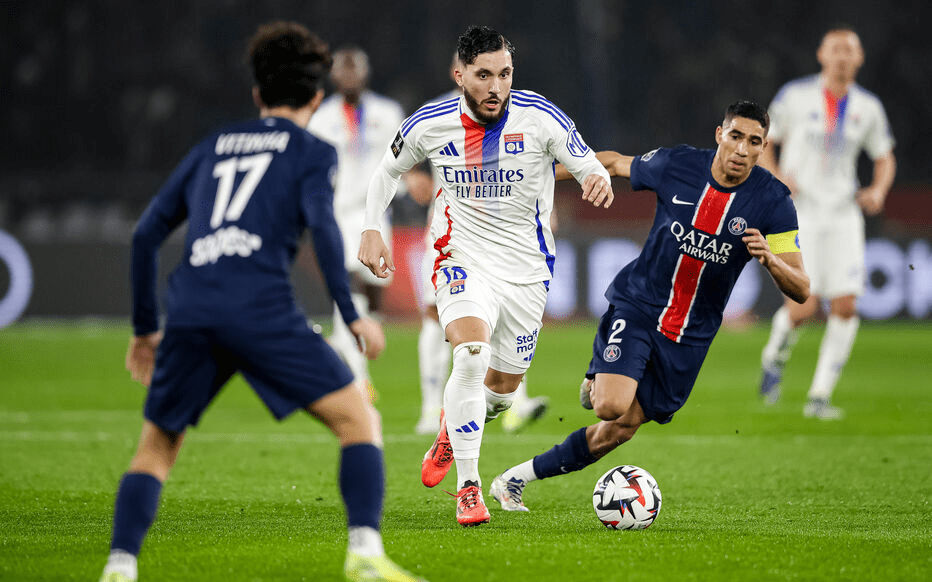
In Ligue 1 2016/17, some teams preferred to work the ball patiently around the edge of the penalty area instead of crossing early or shooting from distance, using short combinations to search for high-quality chances. That approach created intricate attacks and often impressive goals, but it also carried a hidden cost: when possession was lost near the box with many players advanced, opponents could launch quick counter-attacks into large spaces, turning a failed move into an immediate threat the other way. Understanding this trade-off between control and exposure is crucial for reading how “pass-happy” sides influenced transition risk across the 2016/17 campaign.
Why combining around the box naturally invites counter-attacks
Working the ball around the penalty area typically means committing several players high: full-backs step up, midfielders support just outside the box, and at least two or three forwards occupy the defensive line. Coaching literature on build-up play notes that when many passes are exchanged close to the opponent’s goal, any turnover occurs with the attacking team structurally stretched—defenders far from their own box and midfield cover thinned—so one clean interception can open a direct route to a counter. In Ligue 1 terms, this meant that teams enjoying extended spells of possession near the box in 2016/17 often had to accept a higher baseline risk of being hit quickly in transition if their combinations broke down.
How possession-focused Ligue 1 sides structured their attacks in 2016/17
Analyses of ball-dominant European teams in that era describe a common pattern: a stable base of centre-backs and a holding midfielder, with everyone else encouraged to join in short, angled passing around the box. Paris Saint-Germain, for example, were built around controlled possession and patient probing, often moving the ball from side to side just outside the area to unbalance opponents before finding Edinson Cavani or late-arriving midfielders. Even when Ligue 1 sides were less dominant than PSG, many mid-table teams still tried to mimic that “front-third circulation” idea, using quick one-twos and wall passes at the edge of the box instead of going direct at the earliest opportunity.
Mechanism: from lost short passes to full-speed transitions
The key to understanding the counter-attack risk lies in where and how possession is lost. When a short pass goes astray just outside the area, the defending team often recovers the ball facing forward, with attackers already positioned between lines and the opposition full-backs high up the pitch. Training material on counter-attacking emphasises that the first pass after winning the ball should go forward quickly, ideally into the spaces vacated by those advanced full-backs, to exploit the moment when the opponent’s defensive structure is most disorganised. In practical terms, a single miscontrolled ball at the top of the box in Ligue 1 2016/17 could be enough to trigger a sprinting transition that reached the other penalty area in a handful of passes.
Comparisons: patient edge-of-box attacks vs more direct styles
Teams that rely on quick, vertical balls or early crosses still risk counters, but the shape of that risk differs from the short-passing approach. Direct styles often lose possession deeper, with more players behind the ball, because long passes or early shots end attacks before the whole team has advanced; this leaves more time to recover shape. By contrast, when a Ligue 1 2016/17 side recycled possession repeatedly around the box, their defensive line tended to creep up and midfielders drifted higher, so turnovers occurred with fewer players in protective positions, making it easier for opponents to break through the first press and attack open space.
List: tactical traits that signal a high counter-attack risk for “edge-of-box” teams
Because detailed team-by-team possession maps from 2016/17 are not always visible in summary tables, bettors and analysts need behavioural clues that a side’s preferred attacking style near the box is likely to generate counter opportunities against. A structured checklist helps separate teams that occasionally combine around the area from those whose identity consistently revolves around this pattern.
- Frequent short combinations just outside the penalty area, with midfielders and forwards interchanging positions instead of shooting early.
- Full-backs regularly stepping into the final third while the holding midfielder moves higher to support, leaving only one or two players behind the ball.
- Repeated attempts to “recycle and probe” after blocked shots, passing back into half-spaces rather than resetting deeper.
- Match footage showing multiple attackers positioned between lines when possession is lost, forcing the centre-backs to defend transitions in large spaces.
- Analysts’ or coaches’ comments emphasising patient build-up, “waiting for the right opening,” and “wearing opponents down” rather than urging quick deliveries.
When several of these traits appear repeatedly for a Ligue 1 side across the 2016/17 season, it is reasonable to treat that team as structurally vulnerable to counters whenever their edge-of-box sequences break down. Over time, this can produce a recognisable pattern of concession types, even if headline defensive numbers do not explicitly label goals as “from counter-attacks.”
Table: how edge-of-box possession profiles map to counter-attack threat
The relationship between front-third passing and counter-attack exposure is not binary; different versions of the same idea carry different risks. The table below offers a conceptual mapping useful for interpreting 2016/17-style behaviours when reviewing teams or fixtures.
| Edge-of-box style type | Typical behaviours | Counter-attack exposure | Likely match impact |
| High-risk, many bodies forward | Multiple players inside half-spaces, full-backs high, holding mid advanced | Very high – large spaces behind, few players to stop first pass | More end-to-end, higher chance of sudden breaks |
| Controlled with rest defence | Two or three players deliberately held back, structured counter-press | Moderate – some space, but initial transitions often delayed | Fewer clear counters, more fouls in midfield |
| Cautious circulation | Passing around box without overloading, full-backs restrained | Lower – many players still in secure positions | More sterile possession, fewer dramatic transitions |
This framework shows that not every team that enjoys possession near the box is equally prone to being countered; the difference lies in how many players they commit and how well they organise their “rest defence” behind the ball. For 2016/17 observers, identifying which category a team mostly fell into helps explain why some possession-heavy sides conceded unexpectedly on the break while others controlled both ball and transitions.
Integrating transition risk into UFABET pre-match thinking
Recognising that a Ligue 1 2016/17 team loved to combine around the box is only useful if it changes how you prepare for specific matches. When pre-match analysis suggests a clash between such a side and an opponent known for quick, vertical counter-attacks, you get a classic style contrast: one willing to take risks in the final third, the other primed to exploit any turnover. In a modern sports betting service context like ufa168, a structured bettor would translate that insight into interest in markets that reflect swingy game states—over certain goal lines, “both teams to score,” or time-of-next-goal props—only when the price does not already fully account for the heightened transition risk, rather than automatically backing overs just because one team keeps the ball near the box.
How casino online environments differ from transition-based reasoning
The link between edge-of-box passing and counter-attacks depends on tactics, positioning, and repeated patterns across a season, all of which can be studied and anticipated to some degree. In a casino online environment, by contrast, outcomes follow fixed mathematical rules that are independent of “style” or previous decisions; there is no equivalent of a full-back being caught high or a holding midfielder mistiming a press. Keeping this distinction clear helps ensure that pattern-recognition skills built on Ligue 1 2016/17 transitions are used where they apply—football matches with identifiable tactical structures—and not in games where perceived streaks or “momentum” do not actually affect the underlying odds.
Summary
In Ligue 1 2016/17, teams that liked to string passes together around the edge of the penalty area traded shot quality and control for a higher baseline risk of being exposed on the break when those moves failed. By committing multiple players high and recycling possession in tight spaces, they created conditions in which turnovers near the box could quickly become full-speed counter-attacks into open grass. Reading this risk through behavioural signals and mapping it onto price-sensitive markets on a betting website turns “they pass too much in front of goal” from a casual complaint into a structured, testable factor in how you expect a Ligue 1 match to swing between attack and counter.