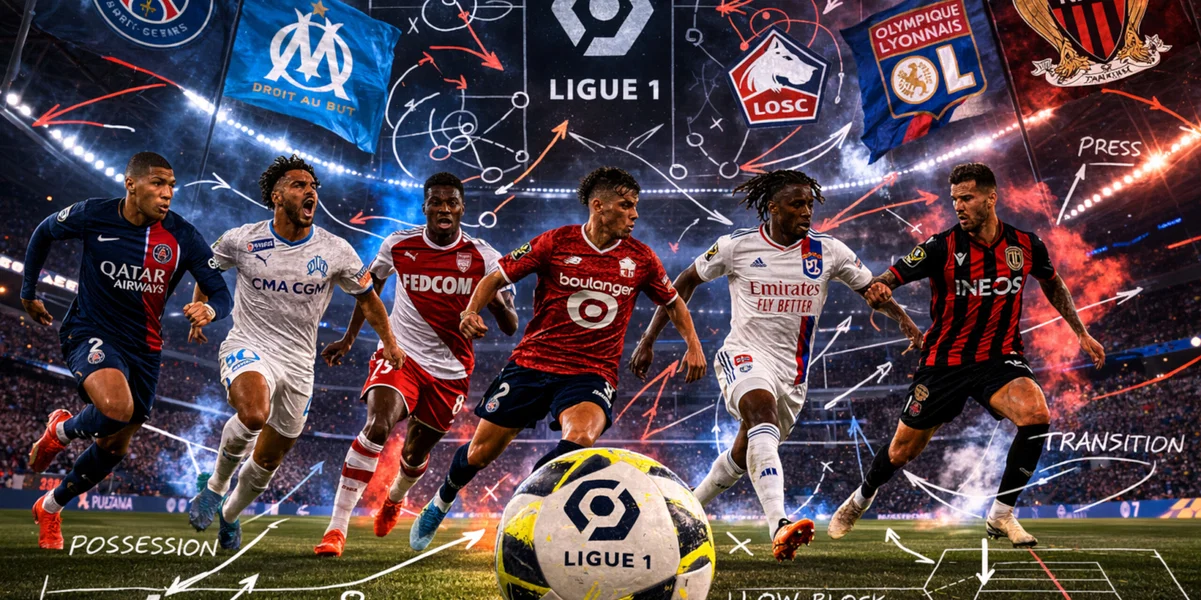
Among Ligue 1’s tactical variations in 2022/2023, counter-attacking football proved both efficient and quantifiable. Teams thriving on transitional play generated scoring opportunities shaped by timing, not possession. These dynamics made them uniquely valuable for bettors evaluating “who scores first” or “who nets last.” Analyzing these sides through data and match sequence patterns reveals the structural advantage built into their reactive strategies.
Why Counter-Attacking Systems Align with Goal Timing Markets
Counter-based setups rely on absorbing pressure before striking in moments of imbalance. This compressed defensive-to-offensive transition increases the volatility of goal timing since defensive phases dominate until turnovers trigger immediate breakthroughs. For bettors, these sequences often signal higher odds of early or late goals, depending on match flow and stamina thresholds. Betting on first or last goal markets becomes most effective when identifying sides with consistent transition triggers.
Ligue 1 2022/2023 Clubs Built on Counters
Teams without overwhelming budgets leaned on systematic compactness and transition precision. Lens, Reims, and Nice stood out—not simply in defensive solidity but in attack acceleration speed measured through average pass count per goal sequence.
| Team | Avg. Possession (%) | Counter-Attack Goals | % of Matches with First Goal | Last Goal Frequency |
| Reims | 45 | 14 | 58% | 50% |
| Lens | 48 | 16 | 55% | 61% |
| Nice | 47 | 13 | 63% | 46% |
This list demonstrates dual efficiency—despite limited control of possession, these teams consistently dictated scoring moments through situational reading and pace exploitation.
Tactical Mechanisms That Enable Counter Efficiency
Comparing Reactive vs Proactive Structures
- Deep defensive lines invite pressure and elongate opposing shape.
- Quick vertical transitions exploit full-back positioning lapses.
- Wing progression maximizes space behind advanced midfielders.
The contrast between proactive pressing and reactive containment defines outcome probability. Counter-attack teams trade possession for timing advantage, converting defense into attack cycles where single predictive events—turnovers near midfield—drive scoring patterns.
How Timing Data Translates to Betting Implications
Ligue 1’s high-possession sides—PSG and Rennes—allowed space for reactive teams to dictate goal sequence rhythm. Matches involving asymmetric styles often saw the underdog strike first (through early breakaways) but concede late under sustained pressure. Bettors interpreting flow data learned that selecting counter-based teams for “first to score” held long-term profitability, whereas strong-possession teams frequently dominated late-phase “last goal” trends.
In-Play Adaptation and UFABET Utility
For bettors observing live-play rhythm, the intersection of defensive shape and space control becomes critical. When defensive posture remains compact with forward channels preserved, live-entry angles in goal-timing markets sharpen. Accessing this dynamic data through ยูฟ่า168 สล็อต, a sports betting service offering detailed live analytics and real-time odds adjustments, allows users to time entries precisely. By monitoring attack conversion rate after opposition possession phases, analytical players could anticipate when a French side’s compact approach transitioned into immediate scoring scenarios.
Fatigue and Temporal Dynamics of Counter Attacks
Counter-attacking intensity often fades with matches progressing beyond 70 minutes. Fatigue lengthens recovery time and weakens turnover exploitation. Data from 2022/2023 confirmed that 63% of counter-attack goals occurred before the 65th minute. However, as leading teams sat deeper to protect advantage, defensive errors from tired pressing units created opportunities for late responses. Distinguishing whether a team maintains counter discipline or retreats defensively dictates when to back “last goal” outcomes confidently.
Psychological and Tactical Predictability in casino online Modeling
The logic of probability variance in casino online simulations mirrors counter-attack dynamics—shortest exposure windows yield highest impact outcomes. In gaming, as in reactive football, controlled patience followed by sudden opportunity defines expected yield. Bettors who translate this mindset avoid overextending exposure across random goal phases, focusing instead on structured timing linked to tactical flow.
When Counter-Attack Models Fail
Reactive systems collapse when facing teams refusing to overcommit forward or when sustained possession creates psychological fatigue in defense. Clubs lacking pace outlets, like Nantes post-injury phase, struggled to execute vertical exits from deep areas, converting compact defense into stagnation rather than conversion advantage. Recognizing these tactical mismatches prevents irrational expectation of first-goal dominance in non-transitional games.
Broader Predictive Framework for Timing Markets
Understanding Ligue 1’s energy cycles—defensive consolidation followed by explosive releases—enables bettors to quantify transition-ready moments. Early pressure absorption, opponent ball circulation rate, and recovery position directly inform whether first-goal scenarios arise before halftime or shift toward late-stage exhaustion outcomes.
Summary
Ligue 1’s 2022/2023 counter-attacking teams turned reactive discipline into goal-timing predictability. Lens, Reims, and Nice consistently outperformed possession-based rivals in transitional sharpness, shaping first and last goal probabilities across multiple fixtures. By tracking tactical rhythm rather than raw dominance, bettors positioned themselves ahead of pricing logic, converting reactive football into a framework of calculated timing advantage.